
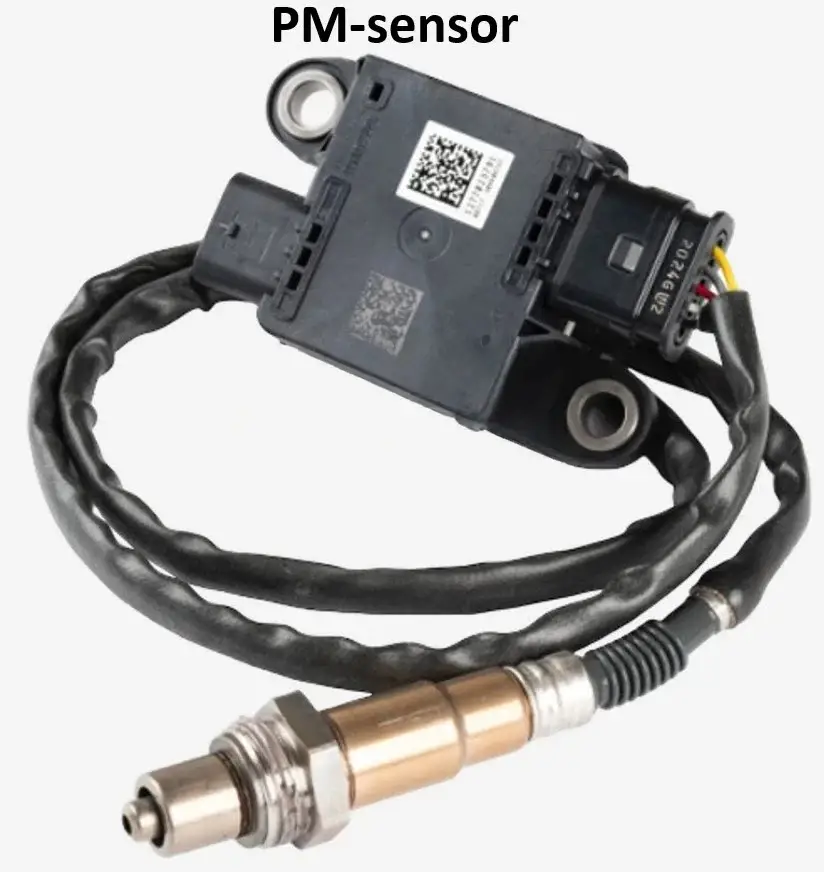
In an era where air quality has become a global concern—affecting health, productivity, and environmental sustainability—PM particulate matter sensors have emerged as essential tools for monitoring and managing air pollution. Whether you’re a homeowner looking to protect your family, an industrial operator ensuring workplace safety, or an environmental professional tracking outdoor air quality, understanding PM sensors is key to making informed decisions. This guide breaks down everything you need to know about PM particulate matter sensors, from how they work to how to choose the right one for your needs—all optimized to help you find the best solutions for your air quality monitoring goals.
What Is a PM Particulate Matter Sensor?
A PM particulate matter sensor (often referred to as a PM sensor) is a device designed to detect and measure the concentration of suspended particulate matter in the air. Particulate matter (PM) refers to tiny solid or liquid particles floating in the atmosphere, categorized by their size: PM2.5 (particles smaller than 2.5 micrometers, capable of penetrating deep into the lungs and bloodstream) and PM10 (particles smaller than 10 micrometers, which can irritate the respiratory system). These sensors play a critical role in identifying air pollution hotspots, ensuring compliance with environmental regulations, and safeguarding human health.
Unlike basic air quality monitors, high-quality PM sensors provide real-time, accurate data that can be integrated into IoT systems, smart homes, industrial control panels, and environmental monitoring networks. They work by using optical or laser-based technology to detect particle size and count, converting that data into actionable insights for users across industries.
How Do PM Particulate Matter Sensors Work?
Most modern PM sensors use one of two core technologies to measure particulate matter: optical sensing and laser scattering. Both methods are designed to detect particles with high precision, but they differ in their approach and use cases.
1. Optical PM Sensors
Optical PM sensors use a light source (typically an LED) and a photodetector to measure the amount of light scattered by particles in the air. When air passes through the sensor’s chamber, particles reflect light onto the photodetector, which converts the light signal into an electrical signal. The strength of this signal corresponds to the concentration of particles—more particles mean more scattered light, resulting in a higher reading.
Optical PM sensors are cost-effective, energy-efficient, and ideal for consumer-grade applications like smart home air purifiers, portable air quality monitors, and indoor air quality (IAQ) systems. They are best suited for measuring PM2.5 and PM10 in low-dust environments.
2. Laser PM Sensors
Laser PM sensors use a focused laser beam to detect and count individual particles. The laser illuminates particles as they pass through the sensor, and a photodetector measures the scattered light at a specific angle. This technology allows for more precise measurements, even in high-dust environments, and can distinguish between different particle sizes (e.g., PM1, PM2.5, PM10) with greater accuracy.
Laser PM sensors are commonly used in industrial settings, environmental monitoring stations, and professional-grade equipment where accuracy is critical. They are more sensitive than optical sensors but may be slightly more expensive and require regular calibration to maintain performance.
Types of PM Particulate Matter Sensors (By Application)
PM sensors are available in a range of types, each tailored to specific use cases. Choosing the right type depends on your monitoring needs, environment, and budget. Below are the most common types of PM sensors:
1. Consumer-Grade PM Sensors
Designed for home, office, or personal use, consumer-grade PM sensors are compact, easy to use, and affordable. They typically measure PM2.5 and PM10, and many connect to smartphones via Bluetooth or Wi-Fi for real-time data monitoring. Popular applications include smart air purifiers, portable air quality monitors, and home IAQ systems. Key features include low power consumption, user-friendly interfaces, and compact design.
2. Industrial PM Sensors
Industrial PM sensors are built to withstand harsh environments, high temperatures, and high dust concentrations. They are used in factories, power plants, construction sites, and manufacturing facilities to monitor air quality and ensure compliance with occupational safety regulations (e.g., OSHA standards). These sensors are durable, high-precision, and often integrate with industrial control systems (ICS) for automated alerts and data logging.
3. Environmental PM Sensors
Environmental PM sensors are used by government agencies, research institutions, and environmental organizations to monitor outdoor air quality. They are deployed in monitoring stations, drones, and mobile units to track PM2.5 and PM10 levels across cities, rural areas, and industrial zones. These sensors are highly accurate, weather-resistant, and capable of long-term, continuous monitoring.
4. IoT-Enabled PM Sensors
IoT-enabled PM sensors connect to the internet, allowing for remote monitoring, data analytics, and integration with smart systems. They are used in smart cities, smart buildings, and IoT networks to provide real-time air quality data across multiple locations. These sensors often feature cloud-based data storage, automated reports, and alert systems for abnormal air quality levels.
Key Features to Look for in a PM Particulate Matter Sensor
When choosing a PM sensor, it’s important to prioritize features that align with your specific needs. Below are the most critical factors to consider:
- Accuracy & Precision: Look for sensors with calibration certificates and a proven track record of accuracy. Laser sensors are generally more precise than optical sensors, making them ideal for professional and industrial use.
- Particle Size Detection: Ensure the sensor measures the particle sizes relevant to your application (e.g., PM2.5 for indoor health, PM10 for industrial dust monitoring).
- Response Time: Fast response times (typically 1-5 seconds) are critical for real-time monitoring, especially in industrial or environmental settings where air quality can change rapidly.
- Durability & Reliability: For industrial or outdoor use, choose sensors with rugged designs, weather-resistant enclosures, and long operating lifespans.
- Connectivity: IoT-enabled sensors with Wi-Fi, Bluetooth, or LoRaWAN connectivity allow for remote monitoring and data integration.
- Power Consumption: For portable or battery-powered applications, low power consumption is essential to extend battery life.
- Calibration: Regular calibration ensures accuracy over time. Look for sensors that are easy to calibrate or come with automated calibration features.
Top Applications of PM Particulate Matter Sensors
PM sensors are used across a wide range of industries and applications, thanks to their versatility and ability to provide critical air quality data. Below are the most common applications:
1. Indoor Air Quality (IAQ) Monitoring
In homes, offices, schools, and hospitals, PM sensors monitor indoor air quality to protect occupants from harmful particles. They are often integrated with air purifiers, HVAC systems, and smart home devices to automatically adjust air filtration based on real-time PM levels.
2. Industrial Safety & Compliance
In factories, construction sites, and mining operations, PM sensors monitor dust levels to ensure compliance with occupational safety regulations. They alert workers and managers to dangerous dust concentrations, helping to prevent respiratory illnesses and workplace accidents.
3. Environmental Monitoring
Government agencies and environmental organizations use PM sensors to track outdoor air quality, identify pollution sources, and assess the impact of industrial activities on the environment. This data is used to develop air quality policies and inform the public about health risks.
4. Smart Cities & IoT Networks
Smart cities deploy IoT-enabled PM sensors across urban areas to monitor air quality in real time. This data is used to optimize traffic flow, reduce pollution, and improve public health. Sensors are often integrated with other smart city systems, such as traffic lights and public transportation, to create a more sustainable urban environment.
5. Portable Air Quality Monitoring
Portable PM sensors are used by individuals, researchers, and professionals to monitor air quality on the go. They are ideal for travelers, outdoor enthusiasts, and researchers studying air quality in remote or hard-to-reach areas.
FAQs About PM Particulate Matter Sensors
Below are answers to the most common questions about PM sensors, designed to address user search intent and provide valuable information:
Q1: What’s the difference between PM2.5 and PM10 sensors?
PM2.5 sensors measure particles smaller than 2.5 micrometers, which are more harmful to human health due to their ability to penetrate deep into the lungs and bloodstream. PM10 sensors measure particles smaller than 10 micrometers, which are larger and primarily irritate the upper respiratory system. Many sensors measure both PM2.5 and PM10 for comprehensive air quality monitoring.
Q2: How often do PM sensors need to be calibrated?
The calibration frequency depends on the sensor type and application. Consumer-grade sensors typically require calibration every 6-12 months, while industrial and environmental sensors may need calibration every 3-6 months to maintain accuracy. Some IoT-enabled sensors offer automated calibration features to simplify maintenance.
Q3: Are PM sensors compatible with IoT systems?
Yes, most modern PM sensors are IoT-enabled and can be integrated with IoT platforms, cloud-based data systems, and smart devices. They use Wi-Fi, Bluetooth, LoRaWAN, or cellular connectivity to transmit data in real time, allowing for remote monitoring and data analytics.
Q4: What is the best PM sensor for home use?
For home use, look for a consumer-grade optical or laser PM sensor that measures PM2.5 and PM10, connects to your smartphone, and has a user-friendly interface. Choose a sensor with low power consumption and a compact design that fits easily in your home. Look for reviews and certifications to ensure accuracy.
Q5: How do PM sensors help with environmental compliance?
PM sensors provide real-time data on particulate matter concentrations, which helps businesses and government agencies comply with environmental regulations (e.g., EPA standards in the U.S., EU air quality directives). They can detect超标 levels of PM2.5 and PM10, allowing for timely adjustments to reduce pollution and avoid fines.
Conclusion: Choose the Right PM Particulate Matter Sensor for Your Needs
PM particulate matter sensors are essential tools for monitoring air quality, protecting health, and ensuring compliance across industries. Whether you’re looking for a consumer-grade sensor for your home, an industrial sensor for your factory, or an environmental sensor for your research, understanding the different types, features, and applications will help you make the right choice.
At [Your Brand Name], we offer a range of high-quality PM sensors designed for every application—from consumer to industrial. Our sensors are calibrated for accuracy, built to last, and IoT-enabled for seamless integration with your systems. Contact us today to learn more about our PM particulate matter sensors and how they can help you monitor and improve air quality.
Keywords: PM sensor, PM2.5 sensor, PM10 sensor, particulate matter sensor, air quality sensor, PM sensor module, industrial PM sensor, portable PM sensor, IoT PM sensor, PM sensor calibration, indoor air quality sensor, environmental PM sensor

test123
1
How can I assist you?
How can I assist you?