Ford NOx Sensor MB3G-5E145-CA | Bosch 0281009304 Complete Guide
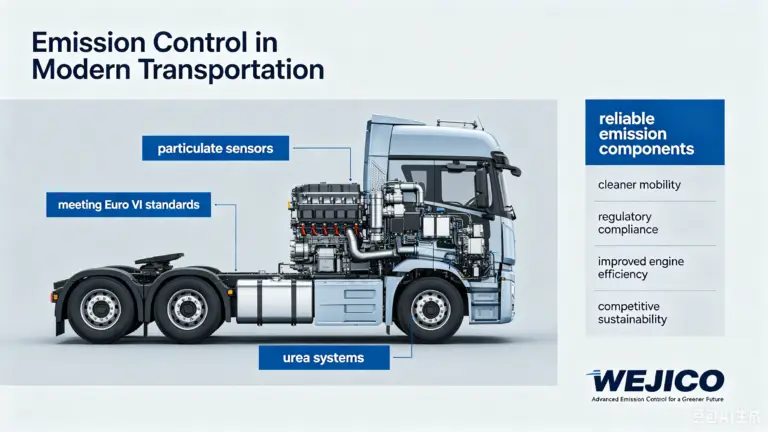
If you own a 2022+ Ford Ranger P703 with the 2.0L EcoBlue bi-turbo diesel engine, understanding your MB3G-5E145-CA NOx sensor is essential. Also known by its Bosch part number 0281009304, this smart nitrogen oxide sensor plays a critical role in your vehicles Selective Catalytic Reduction (SCR) system, ensuring compliance with Euro 6d emissions standards while maintaining optimal engine performance.
In this comprehensive guide, well cover everything you need to know about the Ford MB3G-5E145-CA NOx sensor — from how it works and technical specifications to common failure symptoms, replacement steps, and where to find a reliable replacement. Whether youre a professional mechanic or a DIY enthusiast, this guide will help you make informed decisions about your NOx sensor replacement.
What Is the Ford MB3G-5E145-CA NOx Sensor?
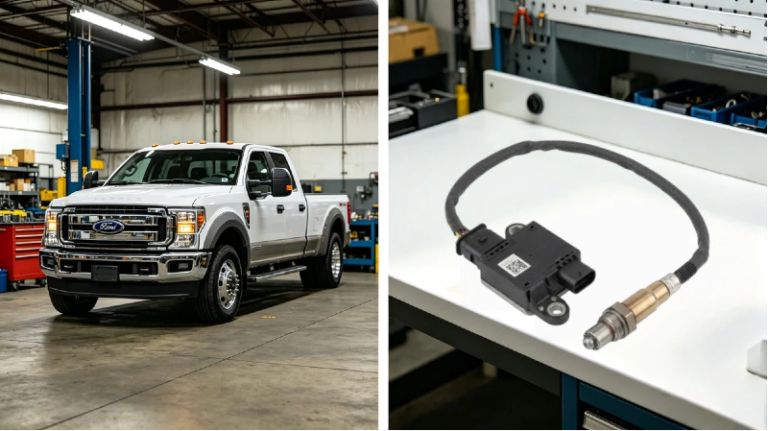
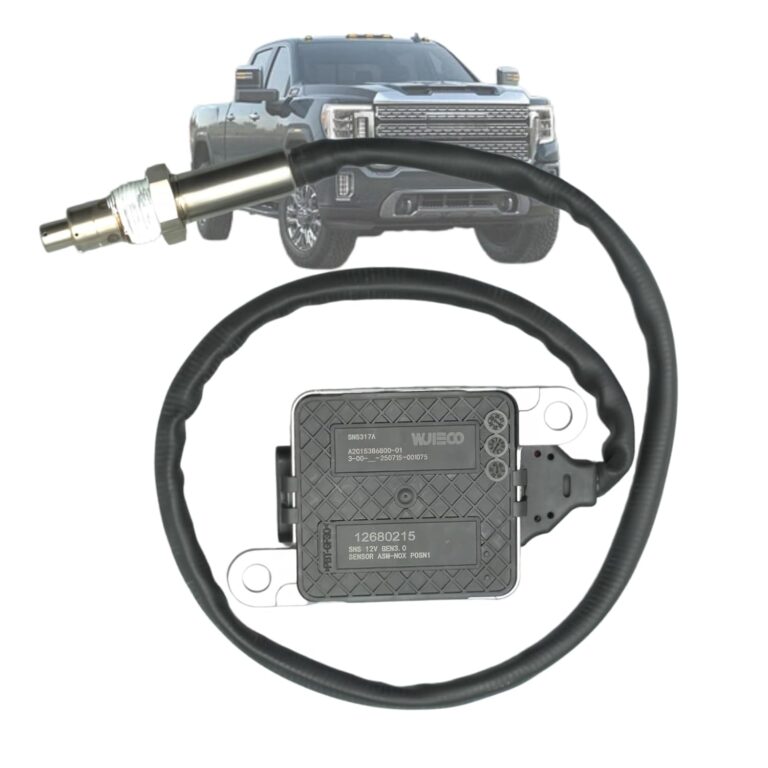
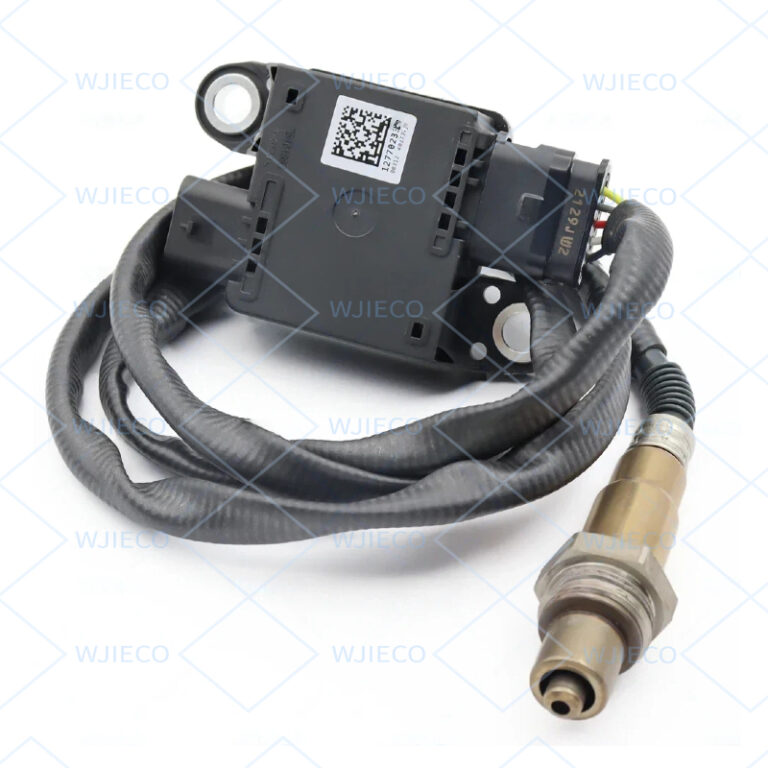
The MB3G-5E145-CA is Fords original equipment (OE) nitrogen oxide sensor designed specifically for the latest-generation Ford Ranger P703 platform (2022–present). Manufactured by Bosch under the part number 0281009304, this sensor is a CAN-bus smart NOx sensor with an integrated control unit that measures NOx concentrations in the exhaust stream downstream of the SCR catalytic converter.
Ford also references this sensor under the internal material number 2626573. As a post-SCR NOx sensor (often referred to as NOx Sensor 2 or downstream NOx sensor), its primary function is to monitor the efficiency of the SCR system by comparing NOx levels before and after the catalyst. This data allows the engine control unit (ECU) to precisely adjust AdBlue (diesel exhaust fluid) injection rates, ensuring maximum NOx reduction while preventing ammonia slip.
Key Functions of the MB3G-5E145-CA Sensor
- Real-time NOx concentration measurement in the exhaust gas
- SCR conversion efficiency monitoring for emissions compliance
- AdBlue injection rate adjustment via ECU feedback
- OBD-II emissions diagnostics and fault code reporting
- Engine protection through limp-mode activation when faults are detected
Bosch 0281009304: OEM Technology Inside
The Bosch 0281009304 is the exact OEM sensor supplied to Ford for the MB3G-5E145-CA application. Bosch, a global leader in automotive sensor technology, designs these smart NOx sensors to meet the strictest durability and accuracy requirements for modern diesel emissions systems.
Unlike traditional narrowband oxygen sensors, the Bosch 0281009304 features a multi-cell electrochemical design that can directly measure NOx concentrations from 0 to 3000 ppm. The integrated control unit processes sensor signals internally and communicates with the vehicle ECU via CAN 2.0B protocol, ensuring fast response times and reliable data transmission even under extreme operating conditions.
Technical Specifications: Bosch 0281009304
| Parameter | Specification |
|---|---|
| Ford OE Part Number | MB3G-5E145-CA |
| Bosch Part Number | 0 281 009 304 (0281009304) |
| Ford Internal Material Number | 2626573 |
| Sensor Type | Smart NOx sensor with integrated control unit |
| Communication Protocol | CAN 2.0B |
| NOx Measurement Range | 0 – 3000 ppm |
| Measurement Accuracy | ±5 ppm (0–100 ppm range) |
| Supply Voltage | 12V (vehicle electrical system) |
| Response Time (t10–90) | ~1000 ms |
| Warm-Up Time | ≤ 60 seconds to operating temperature |
| Probe Max Temperature | 950°C |
| Control Unit Operating Temp | -40°C to +140°C |
| Connector | 6-pin Ford-specific waterproof connector |
| Thread Size | M18 × 1.5 (standard exhaust thread) |
| Mounting Torque | 40 – 45 N·m |
| Emissions Standard | Euro 6d / EPA Tier 3 equivalent |
Vehicle Compatibility: Ford Ranger P703 (2022+)
The MB3G-5E145-CA NOx sensor is exclusively designed for the Ford Ranger P703 generation introduced in 2022. It is not compatible with the previous T6 generation (2016–2022) Ranger models, which use a different NOx sensor (GB3G-5E145-AF / Bosch 0281006790).
Compatible Models
- Ford Ranger P703 (2022–present) — 2.0L EcoBlue Bi-Turbo diesel engines
- Engine variants: 170 PS (125 kW) and 213 PS (157 kW) bi-turbo versions
- All body styles: Single Cab, Super Cab, Double Cab
- Markets: Europe, Australia, Southeast Asia, South Africa, and other markets with Euro 6d-compliant diesel Rangers
Important: This sensor is for diesel models only. The 2.3L EcoBoost gasoline Ranger does not use a NOx sensor. Always verify your part number before purchasing.
Cross-Reference Part Numbers
- Ford: MB3G-5E145-CA, MB3G-5E145-CB, MB3G-5E145-CC (hardware compatible, software calibration may vary)
- Bosch: 0 281 009 304, 0281009304
- Ford Material Number: 2626573
Common Symptoms of a Failing MB3G-5E145-CA NOx Sensor
A malfunctioning NOx sensor can trigger a range of issues that affect both performance and emissions compliance. If you notice any of the following symptoms in your 2022+ Ford Ranger, the MB3G-5E145-CA sensor may need replacement:
1. Check Engine Light (MIL) Illumination
The most common sign of a faulty NOx sensor is the check engine light coming on. The ECU detects abnormal sensor readings and stores a diagnostic trouble code (DTC). Common fault codes associated with the MB3G-5E145-CA include:
- P220A — NOx Sensor Circuit Performance / Signal Drift (Bank 1, Sensor 2)
- P22FB — NOx Sensor Element Failure / Aging
- P220E — NOx Sensor Heater Circuit Fault
- U042C — NOx Sensor CAN Communication Lost
2. Engine Limp Mode / Reduced Power
When the ECU detects a persistent NOx sensor fault, it may activate limp mode (reduced engine power) to protect the emissions system and prevent excessive NOx output. This is especially common if the fault persists for multiple drive cycles.
3. Increased AdBlue Consumption
A failing downstream NOx sensor may send incorrect readings, causing the ECU to over-inject AdBlue in an attempt to reduce perceived high NOx levels. If you notice your DEF consumption has increased significantly without a corresponding change in driving conditions, the NOx sensor could be the culprit.
4. Poor Fuel Economy
While less direct, NOx sensor faults can cause the ECU to run conservative engine tuning strategies that reduce efficiency, resulting in slightly worse fuel economy.
5. Failed Emissions Test
A faulty MB3G-5E145-CA sensor will almost certainly cause your vehicle to fail an emissions inspection, as the SCR system cannot be properly monitored or calibrated.
MB3G-5E145-CA vs GB3G-5E145-AF: Whats the Difference?
One of the most common mistakes when purchasing a Ford NOx sensor is confusing the MB3G-5E145-CA (P703 Ranger, 2022+) with the older GB3G-5E145-AF (T6 Ranger, 2016–2022, Bosch 0281006790). These sensors are not interchangeable despite serving a similar function.
| Feature | MB3G-5E145-CA (P703, 2022+) | GB3G-5E145-AF (T6, 2016–2022) |
|---|---|---|
| Bosch Number | 0281009304 | 0281006790 |
| Platform | Ranger P703 | Ranger T6 |
| Engine | 2.0L EcoBlue Bi-Turbo | 3.2L Duratorq TDCi |
| Emissions | Euro 6d | Euro 5 / Euro 6 |
| Harness Length | Different (P703-specific) | Different (T6-specific) |
| Connector | 6-pin (updated design) | 6-pin (older design) |
| Software Calibration | P703 ECU-specific | T6 ECU-specific |
Always verify your vehicles VIN and original part number before ordering. Installing the wrong NOx sensor will result in communication errors, fault codes, and potentially permanent damage to the sensor or ECU.
How to Replace Your Ford NOx Sensor (Step-by-Step)
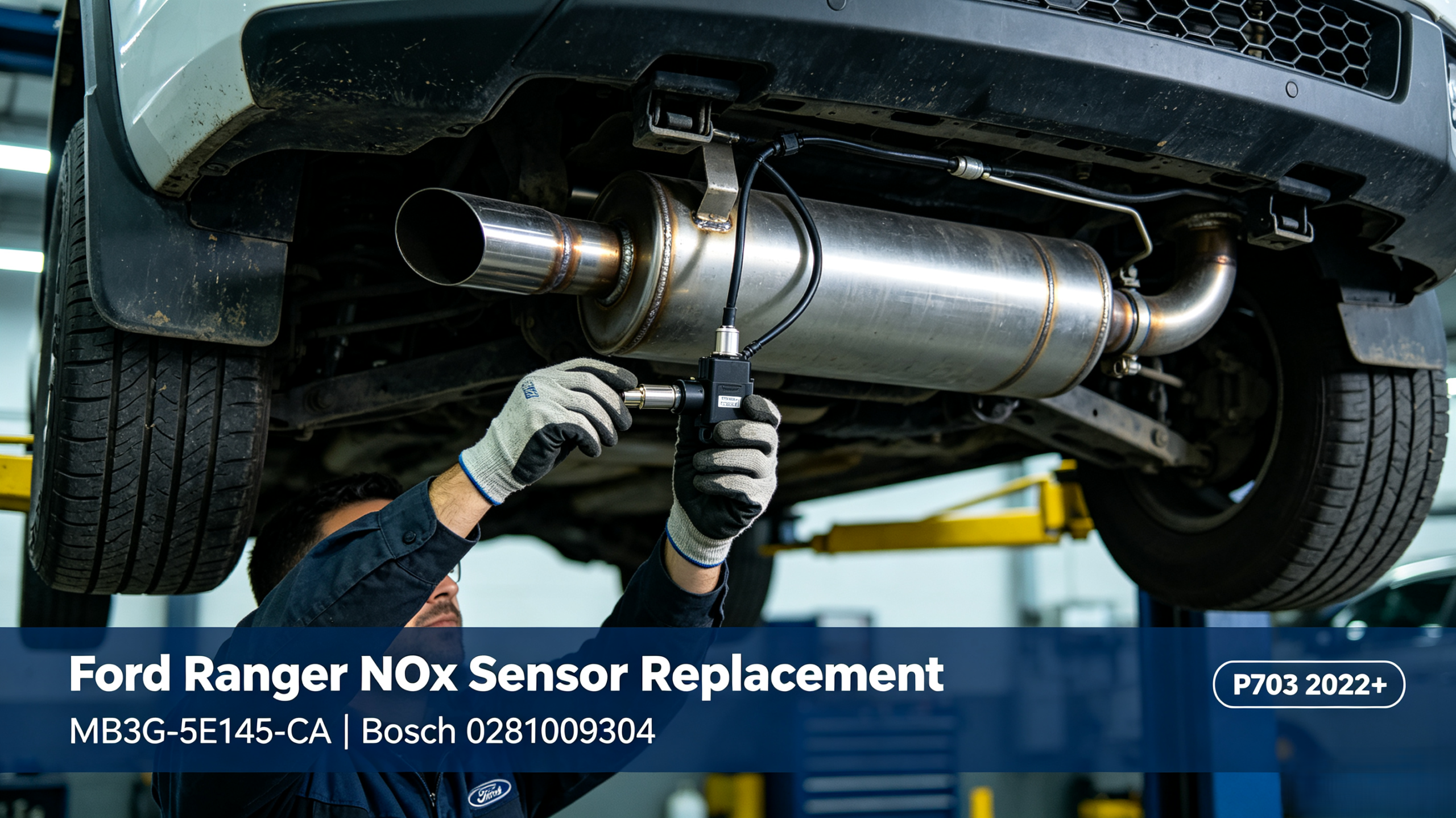
Replacing the MB3G-5E145-CA NOx sensor is a moderately difficult DIY job that requires basic mechanical tools and safety precautions. If youre not comfortable working on your vehicles emissions system, we recommend having a professional technician perform the installation.
Tools Required
- 22mm deep socket (NOx sensor socket preferred with wiring cutout)
- Ratchet and extension bar
- Copper anti-seize compound (high-temperature rated)
- Torque wrench (capable of 40–45 N·m)
- Safety glasses and heat-resistant gloves
- Ford-compatible OBD-II scanner (for code clearing and adaptation)
Replacement Procedure
- Safety First: Ensure the exhaust system is completely cool before starting. Disconnect the negative battery terminal to prevent electrical damage.
- Locate the Sensor: The downstream NOx sensor (MB3G-5E145-CA) is mounted on the exhaust pipe after the SCR catalytic converter, typically under the vehicle near the transmission area.
- Disconnect the Connector: Press the release tab on the 6-pin connector and gently pull it apart. Be careful not to damage the wiring harness.
- Remove the Old Sensor: Using the 22mm socket and ratchet, carefully unscrew the old sensor from the exhaust bung. If its seized, apply a small amount of penetrating oil and wait a few minutes.
- Prepare the New Sensor: Apply a thin layer of high-temperature copper anti-seize to the sensor threads. Do not get anti-seize on the sensor probe itself.
- Install the New Sensor: Thread the new MB3G-5E145-CA sensor into the exhaust bung by hand, then torque to 40–45 N·m using a torque wrench.
- Reconnect the Connector: Plug the wiring harness connector back in until you hear a click. Ensure the connector is fully seated and the locking tab engages.
- Reconnect Battery: Reattach the negative battery terminal.
- Clear Fault Codes: Use a Ford-compatible diagnostic scanner to clear any stored NOx sensor fault codes.
- Perform Adaptation: Run the NOx sensor adaptation / reset procedure using your diagnostic tool. This allows the ECU to learn the new sensors baseline readings.
- Test Drive: Take the vehicle for a 10–20 km test drive under varying load conditions. Monitor for any new fault codes and confirm the check engine light stays off.
Pro Tip: After replacement, its normal for the sensor to take 1–2 full drive cycles to fully calibrate. Some drive cycle monitors may not complete immediately.
Why Choose WJIECO for Your NOx Sensor Replacement?
When it comes to replacing your MB3G-5E145-CA NOx sensor, quality matters. A substandard sensor can cause false readings, premature failure, and even damage to your SCR system. WJIECO offers premium-grade NOx sensors built to OEM specifications, ensuring reliable performance and long service life.
WJIECO Quality Advantages
- IATF 16949 Certified Manufacturing: Our production facilities meet the international automotive quality management standard, ensuring every sensor meets strict tolerances and performance criteria.
- OEM-Grade Components: We use the same high-quality electrochemical cells and materials found in Bosch original sensors, delivering equivalent accuracy and durability.
- Direct Fit Design: WJIECO NOx sensors are designed as direct plug-and-play replacements for MB3G-5E145-CA, with correct connector pinout, harness length, and thread specifications.
- Pre-Calibrated: Each sensor comes pre-calibrated and ready for installation, reducing setup time and ensuring first-time success.
- OEM Supply Heritage: With a track record of supplying major automotive manufacturers, WJIECO brings OEM-level expertise to the aftermarket.
- Comprehensive Testing: Every sensor undergoes rigorous testing — including temperature cycling, vibration testing, and CAN communication validation — before leaving the factory.
WJIECO MB3G-5E145-CA NOx Sensor Features
- Direct replacement for Ford MB3G-5E145-CA / Bosch 0281009304
- Compatible with Ford Ranger P703 2.0L EcoBlue (2022+)
- CAN 2.0B communication protocol
- 0–3000 ppm NOx measurement range
- Fast response time and accurate readings
- High-temperature probe rated to 950°C
- Waterproof 6-pin connector
- Includes copper sealing washer
- Euro 6d emissions compliant
Frequently Asked Questions (FAQ)
Q: How long does a Ford NOx sensor last?
Under normal operating conditions, a quality NOx sensor like the MB3G-5E145-CA typically lasts between 100,000 and 150,000 kilometers. However, its lifespan can be shortened by factors such as contaminated fuel, excessive oil consumption, coolant leaks into the exhaust, or physical damage from road debris.
Q: Can I clean a NOx sensor instead of replacing it?
Unlike some oxygen sensors, NOx sensors cannot be reliably cleaned and restored to proper function. The delicate electrochemical sensing element can be easily damaged by cleaning solvents or physical contact. If your NOx sensor has failed or is producing inaccurate readings, replacement is the only recommended solution.
Q: Can I drive with a bad NOx sensor?
While you may be able to drive with a faulty NOx sensor, we strongly recommend against prolonged operation. A failed NOx sensor can trigger limp mode, reduce fuel efficiency, increase AdBlue consumption, and cause your vehicle to fail emissions testing. In some cases, it can also lead to SCR system damage if the ECU cannot properly regulate AdBlue injection.
Q: Do I need to reset the ECU after replacing the NOx sensor?
Yes, after installing a new MB3G-5E145-CA sensor, you should clear fault codes and perform a NOx sensor reset / adaptation procedure using a Ford-compatible diagnostic tool. This allows the ECU to recognize the new sensor and establish accurate baseline readings. Some vehicles may also require a forced DPF regeneration or specific drive cycle to complete the relearn process.
Q: Is the MB3G-5E145-CA the same as the upstream NOx sensor?
No. The MB3G-5E145-CA is the downstream (post-SCR) NOx sensor, also known as NOx Sensor 2. The upstream (pre-SCR) NOx sensor (NOx Sensor 1) has a different part number and is located before the SCR catalyst. They are not interchangeable.
Q: Will a WJIECO NOx sensor trigger a fault code?
No. WJIECO NOx sensors are designed to be direct OEM replacements with identical electrical characteristics and communication protocols. When installed correctly on the correct vehicle application, they will not trigger fault codes and will function exactly like the original MB3G-5E145-CA sensor.
Q: How do I verify the correct part number for my vehicle?
The most reliable way is to check the part number printed on your existing sensor, or contact a Ford parts department with your VIN (Vehicle Identification Number). You can also visually compare the connector shape, harness length, and thread size to ensure compatibility.
Conclusion
The Ford MB3G-5E145-CA (Bosch 0281009304) NOx sensor is a critical component of the 2022+ Ford Ranger P703s emissions control system. Understanding its function, recognizing failure symptoms, and choosing a quality replacement can save you time, money, and headaches down the road.
Whether youre replacing a failed sensor or performing preventive maintenance, investing in a high-quality NOx sensor from a trusted supplier like WJIECO ensures your Ranger continues to meet Euro 6d emissions standards while delivering the performance and reliability you expect from a Ford vehicle.
Ready to replace your NOx sensor? Browse our full selection of WJIECO NOx sensors for Ford Ranger P703 and other diesel applications. All our sensors come with quality guarantees and are backed by our IATF 16949 certified manufacturing processes.