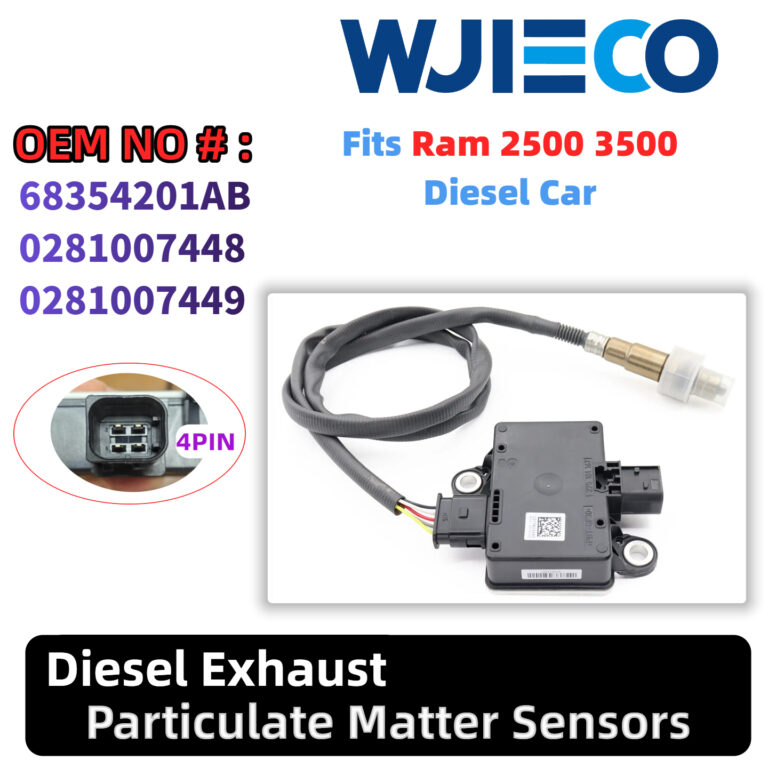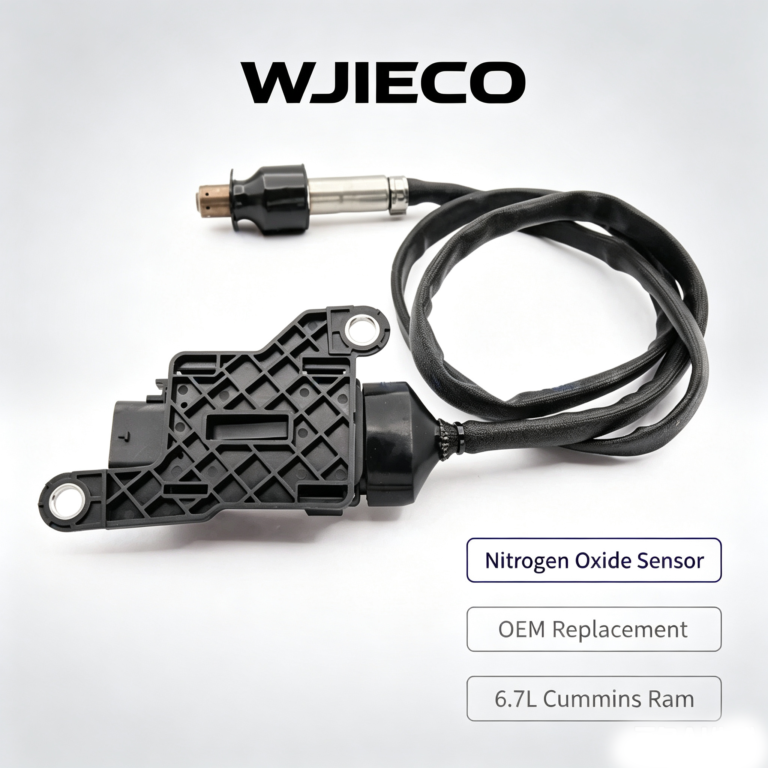
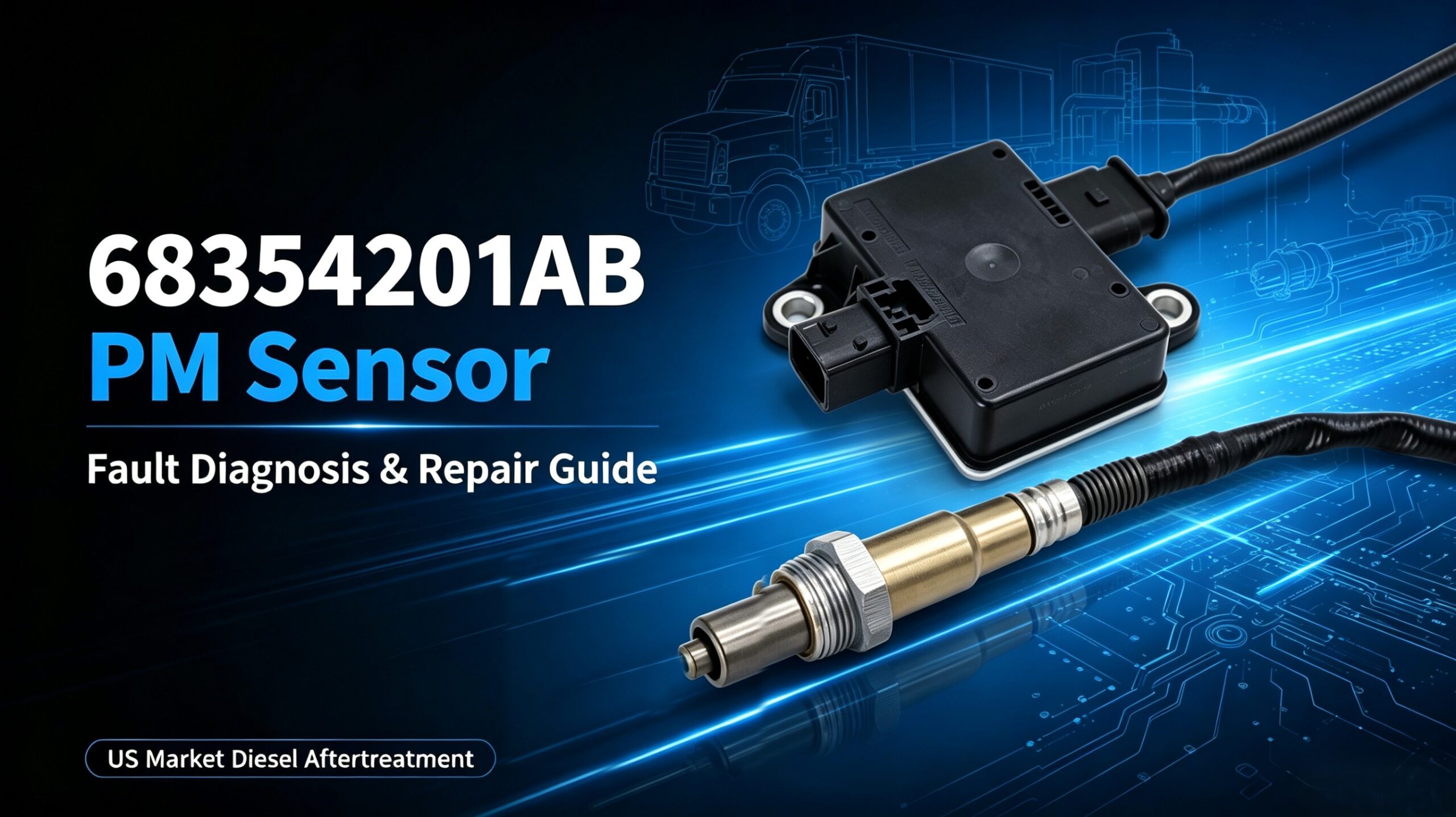
The 68354201AB Particulate Matter (PM) Sensor is an exclusive OEM emissions component engineered for US-market diesel pickup trucks and light-to-heavy-duty commercial vehicles. As a vital part of the exhaust aftertreatment system, it precisely monitors exhaust particulate levels and governs DPF regeneration operations to meet stringentUS EPA emissions regulations.
A faulty 68354201AB PM sensor is a leading cause of check engine lights, reduced engine power, failed DPF regeneration, and limp mode in US-spec diesel vehicles. Automotive technicians frequently encounter recurring DTCs, incomplete regeneration cycles, and unresolved aftertreatment issues even after sensor replacement. This in-depth technical guide details OEM-specific failure symptoms, root causes, common DTC codes, step-by-step troubleshooting, and professional repair procedures for the US-market 68354201AB PM sensor.
1. 68354201AB PM Sensor Compatible US-Spec Vehicle List
The 68354201AB PM sensor features proprietary EPA-calibrated programming and is strictly compatible with factory US-spec diesel vehicles. It is not cross-compatible with Canadian-spec, EU-spec, Chinese domestic, or generic aftermarket PM sensors, as mismatched calibrations disrupt vehicle ECU communication and emissions compliance. Below is the full list of verified compatible US vehicle models and production years:
- US RAM 2500/3500: 6.7L Cummins Diesel (2019–2024) – Factory standard DPF PM sensor
- US Jeep Wrangler / Gladiator: 3.0L EcoDiesel US-spec models (2020–2025)
- US Dodge & Chrysler Light-Duty Diesel Vans & Pickups: Updated 2020+ US-market diesel commercial platforms
- US Heavy-Duty Commercial Trucks: 6.7L Cummins-powered work and freight trucks with OEM DPF aftertreatment systems
Critical Compatibility Warning: The 68354201AB part number is manufactured exclusively for original US-market factory vehicles. Installing this sensor on modified parallel-import trucks, Chinese-retrofitted diesel vehicles, or Canadian/EU-spec equivalents will trigger ECU mismatch errors, permanent DPF regeneration lockouts, and EPA emission non-compliance faults.
2. Function of the 68354201AB OEM PM Sensor
Factory-mounted at the DPF outlet section of US-spec diesel trucks and commercial vehicles, the OEM 68354201AB PM sensor captures real-time soot and particulate matter concentration data from the exhaust stream and transmits accurate signal data to the vehicle’s stock ECU.
The ECU analyzes sensor data to calculate real-time DPF soot load, activate active and passive DPF regeneration cycles, and monitor overall aftertreatment system performance. As the primary feedback sensor for all DPF operations, inconsistent or missing sensor data disables regeneration functionality, triggers emissions fault codes, and activates torque-limiting engine protection modes.
3. Common Symptoms of a Failed 68354201AB PM Sensor
68354201AB PM sensor failures do not cause direct mechanical engine damage, but they force US-spec diesel vehicles into EPA-mandated emissions protection modes to prevent non-compliant exhaust output. The most common failure symptoms include:
- Illuminated MIL / Check Engine Light: Steady or flashing emission fault codes with no mechanical engine issues
- Reduced Power & Poor Acceleration: Limited RPM and torque, vehicle enters limp-home mode
- DPF Regeneration Failure: Unable to initiate auto-regen, forced regen aborting mid-cycle, progressive DPF clogging
- Recurring DTCs: Fault codes return quickly after clearing, during idle or road driving conditions
- Elevated Smoke & Fuel Consumption: Unregulated exhaust particulate output and increased fuel usage due to aftertreatment malfunction
4. Root Causes of 68354201AB Sensor Malfunctions
The majority of 68354201AB PM sensor malfunctions originate from external environmental exposure or wiring defects, rather than internal sensor failure. Unnecessary sensor replacement can be avoided by systematically inspecting the following common root causes:
4.1 Sensor Probe Contamination (Most Common)
Accumulated exhaust soot, engine oil ash, urea crystallization, and sulfate deposits coat the sensor’s probe and sensing electrodes over time, obstructing signal detection and causing delayed, inaccurate, or erratic particulate readings. Frequent short-trip driving and repeated cold-start cycles drastically accelerate probe contamination and premature sensor fault triggers.
4.2 Wiring & Connector Damage
Positioned on the vehicle undercarriage adjacent to high-temperature exhaust components, the 68354201AB sensor wiring harness endures extreme heat, moisture, road mud, and debris exposure. Common electrical faults include connector water intrusion, terminal corrosion, bent or backed-out pins, harness abrasion, short circuits, and open circuits, all of which result in CAN communication failures and active fault codes.
4.3 Heater Circuit Malfunction
The 68354201AB sensor integrates a built-in ceramic heating element designed to evaporate probe condensation and burn off light soot deposits during operation. The OEM-standard heater resistance range is 3–7 ohms. Open heater circuits, shorted heating elements, or out-of-range resistance values trigger heater control DTCs. Continuous thermal cycling and cold soaking are the leading causes of internal ceramic heater damage.
4.4 Secondary Aftertreatment System Issues
Secondary aftertreatment system defects often cause false 68354201AB PM sensor fault codes. Clogged or degraded DPF substrates, malfunctioning SCR urea injection systems, and the use of high-ash engine oil create excessive exhaust particulate levels that exceed the sensor’s detection threshold, prompting erroneous fault activation.
4.5 Internal Sensor Degradation & Physical Damage
High-mileage operation, sustained heavy-load highway driving, improper high-pressure water washing of the exhaust system, and physical impact damage can crack internal ceramic components and destroy sensitive sensing electrodes. As a US-market exclusive calibrated OEM part, no generic aftermarket sensors offer compatible programming, pinout, or performance for the 68354201AB application.
5. Common 68354201AB PM Sensor DTC Fault Codes
Use the following OEM diagnostic trouble codes (DTCs) to accurately pinpoint specific failure points during 68354201AB PM sensor troubleshooting:
- P24B500: PM Sensor Heater Control Circuit Low Voltage
- P24B700: PM Sensor Heater Resistance Out of Range
- P24D100: PM Sensor Regeneration Cycle Incomplete
- P24DA00: PM Sensor Exhaust Sampling Abnormality
- P24FC00: PM Sensor Heater Temperature / Current Too High
6. Step-by-Step 68354201AB Sensor Troubleshooting Procedure
Follow the professional automotive industry’s simple-to-complex, external-to-internal diagnostic workflow to resolve over 90% of 68354201AB PM sensor faults without unnecessary part replacement or costly guesswork:
Step 1: Retrieve DTCs and Live Data
Connect an OEM-grade professional scan tool to retrieve stored DTCs, freeze frame data, and real-time 68354201AB PM sensor live data. A fully functional sensor will display rapid particulate concentration reduction during active DPF regeneration cycles. Stagnant, unchanging, or erratic readings confirm an active sensor or aftertreatment fault.
Step 2: Inspect Harness and Connector
Thoroughly inspect the sensor electrical harness and connector for loose connections, water intrusion, terminal corrosion, bent/damaged pins, and abraded wiring insulation. Clean corroded terminals, reseal all connections, and secure loose harness routing to eliminate common electrical fault triggers.
Step 3: Test Heater Resistance
Disconnect the 68354201AB sensor connector and test the internal heating element with a digital multimeter. 3–7 ohms resistance confirms normal heater operation. Infinite resistance indicates an open heater circuit, while abnormally low resistance signals a shorted heater—both conditions require full sensor replacement.
Step 4: Clean the Sensor Probe
Remove the 68354201AB sensor and inspect the probe for soot, ash, and crystalline buildup. Clean the probe exclusively with low-pressure dry compressed air. Never use high-pressure water, abrasive tools, or chemical cleaners, as these practices will crack the fragile ceramic element and permanently destroy the sensor. Allow the sensor to air-dry completely before reinstallation.
Step 5: Perform Forced DPF Regeneration & Functional Test
Initiate a forced DPF regeneration cycle via professional scan tool while continuously monitoring 68354201AB PM sensor live data. A healthy sensor will show steady, consistent particulate reduction throughout regeneration. No data response or repeated regen abortion confirms a faulty sensor. A bench air-blow test can also verify real-time current fluctuation and signal responsiveness.
Step 6: Complete OEM Sensor Relearn & Adaptation
Critical OEM Required Step: After cleaning or replacing the 68354201AB PM sensor, complete the factory-specified sensor reset and ECU adaptation procedure to recalibrate baseline sensor values. Skipping this mandatory step causes immediate DTC recurrence and continuous DPF regeneration failure. Clear all stored fault codes and perform a full road test to validate the repair.
7. Targeted Repair Solutions
7.1 Contamination Faults: Clean and Recalibrate
If multimeter testing confirms normal heater resistance and wiring integrity, and faults stem solely from probe contamination, dry-air cleaning paired with OEM sensor relearn and forced DPF regeneration will resolve the issue permanently without replacement.
7.2 Wiring & Circuit Faults: Repair and Reseal
Repair damaged wiring harnesses, replace corroded connector terminals, and apply heavy-duty waterproof sealing to undercarriage electrical components for long-term protection. Replace the genuine OEM 68354201AB sensor if heater circuit resistance remains out of factory specifications.
7.3 Internal Sensor Failure: Install Genuine US-OEM Replacement
Replace the sensor if ceramic cracking, electrode damage, or permanent heater failure is identified. Only genuine US-market 68354201AB OEM sensors are approved for use. Generic aftermarket or imported sensors feature mismatched calibration, pinout configurations, and operating logic, leading to permanent EPA compliance errors, DPF regen lockouts, and failed emissions testing. Always complete post-installation ECU adaptation.
7.4 Secondary Aftertreatment Faults: Full System Repair
Resolve underlying aftertreatment system issues including clogged DPF substrates, faulty SCR dosing systems, and low-quality/high-ash engine oil to eliminate false PM sensor fault triggers and prevent repeated malfunctions.
8. Preventive Maintenance Tips for 68354201AB PM Sensors
- Avoid excessive short-cycle low-speed driving; perform periodic highway cruising or manual regens to reduce soot accumulation
- Use EPA-compliant low-ash engine oil and high-quality diesel fuel to minimize exhaust deposits
- Avoid direct high-pressure washing on the PM sensor assembly to prevent water intrusion and ceramic cracking
- Regularly inspect connector sealing and harness condition after off-road or wet driving conditions
- Replace worn DPF units at factory service intervals to prevent excessive particulate overload damaging the PM sensor
9. Conclusion
For all US-spec diesel vehicles equipped with the factory 68354201AB PM sensor, 70% of reported faults are caused by probe contamination, wiring defects, or incomplete ECU calibration, while only 30% require actual sensor replacement. The most common technician error is installing incompatible generic aftermarket sensors or skipping mandatory OEM adaptation, which leads to persistent emissions faults and chronic DPF system failure. Following this standardized diagnostic workflow delivers accurate, cost-effective repairs while preserving full EPA compliance and reliable aftertreatment performance for US-market diesel trucks.
Keywords: 68354201AB PM Sensor, 68354201AB PM Sensor Fault, US Market PM Sensor Troubleshooting, RAM 6.7L Cummins PM Sensor Repair, DPF Regeneration Failure, US-spec Diesel Aftertreatment Issues, 68354201AB OEM Sensor Compatibility